The same fight, over and over, is a pattern. Patterns can change.
Relationship-focused therapy for adults, with 17 years of clinical experience behind it. Practical, judgment-free, and straightforward: a neutral person who listens carefully, says what he thinks, and helps you decide what comes next. Thomas A. Jones, LCSW, LCADC.
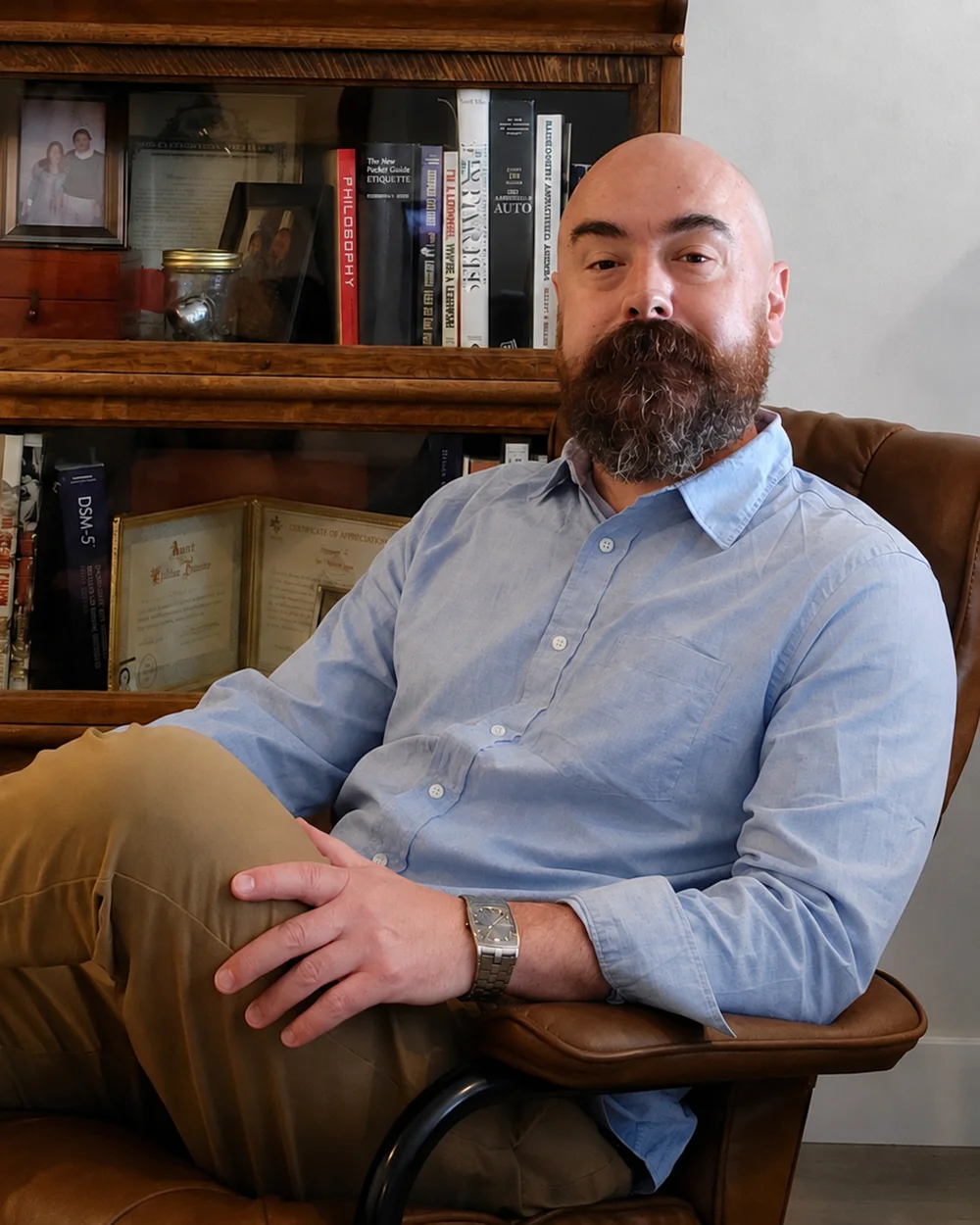

Walking on eggshells at home is exhausting.
You do not need to be in crisis to start. Most people come in wanting to stop repeating the same conversation.
Maybe you are questioning whether the person you are dating is right for you, or you keep having the same argument about money, or trust, or who does what. Maybe one of you shuts down and the other gets louder. Maybe you feel more like roommates than partners. Or maybe you are dealing with a breakup, mixed signals, difficulty trusting, setting boundaries, or trying to understand what you really want from a partner.
Therapy does not have to be overly clinical or abstract. Sometimes you need a neutral person who will listen carefully, help you see the situation more clearly, challenge you when needed, and help you decide what comes next. Nobody gets ganged up on here. When a couple comes in, the relationship is the client.
Whether you are trying to improve a relationship, recover from one, make sense of modern dating, or stop repeating patterns that are not working for you, the goal is a comfortable, honest space where you can talk about what is really happening and leave with more clarity, confidence, and direction. If drinking, anxiety, or old trauma are tangled up in it, they can be worked on in the same room. See how relationship therapy, trauma therapy, and recovery work fit together.
Relationships first. Everything else that comes with them, too.
Four areas of focus, all handled with the same practical, plain-spoken approach.
Relationships
Couples and individuals working on a relationship: the fight that keeps repeating, a partner who shuts down, trust after it has been broken, deciding whether to stay, or dating without repeating the last one. You can start on your own if your partner will not come yet.
Trauma
Old events that still set the tone for how you react, attach, and protect yourself. Trauma work here is steady and paced, and it stays connected to what is happening in your life and relationships now.
Depression & Anxiety
Low mood, worry, grief, and the self-doubt that comes with them. Cognitive behavioral work and practical strategies for the days that are hard to get through, without pretending the hard days are not real.
Substance Use & Recovery
Drinking, drug use, and the relationships they strain. As a licensed clinical alcohol and drug counselor and NAADAC Master Addiction Counselor, Thomas works on recovery and the relationship in the same room, because that is usually where they both live.
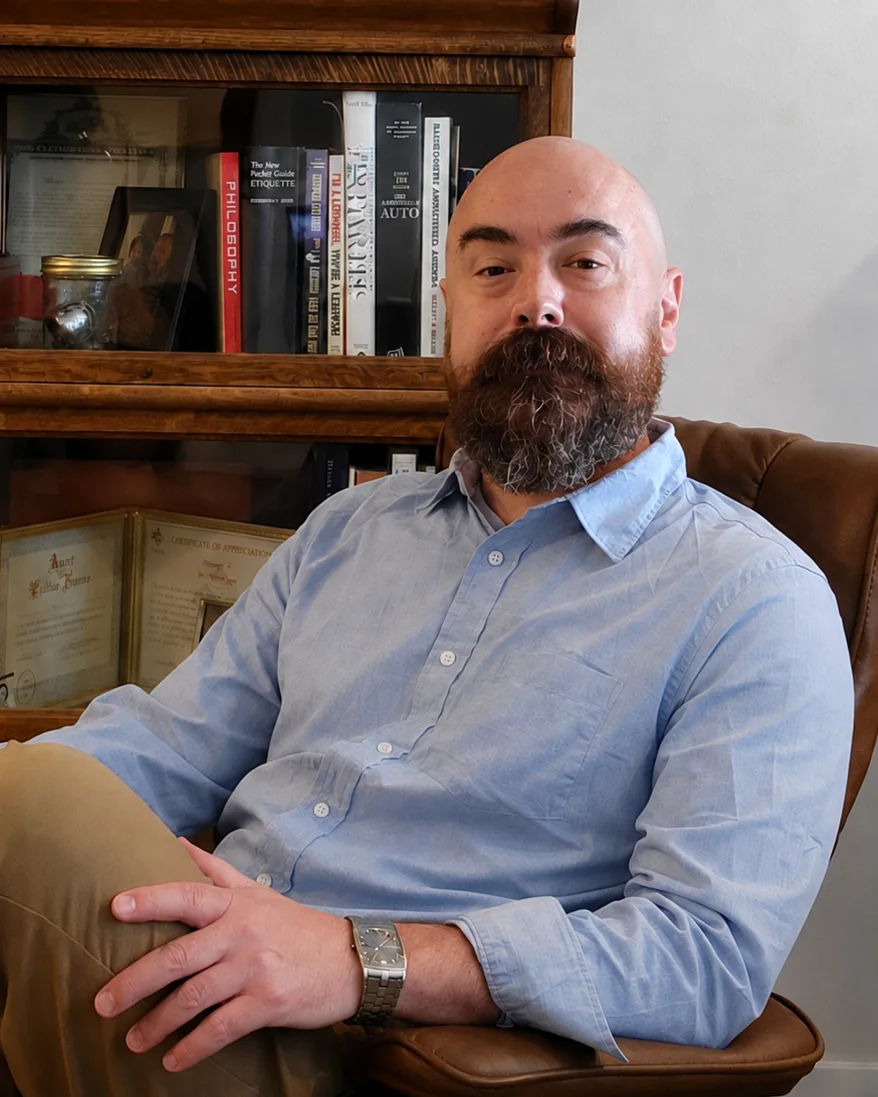
Supportive, straightforward, and focused on you.
Therapy works best when you have a neutral person who will listen carefully, help you see the situation more clearly, challenge you when needed, and help you decide what comes next. That is the job, and after 17 years of clinical work it is the part Thomas still likes most.
Most people who reach out are dealing with something in a relationship: a pattern they cannot seem to break, a decision they cannot make, a breakup they are not over, or a partner they cannot reach. Underneath it there is often anxiety, low mood, an old injury, or drinking that has quietly become part of the picture. Those get worked on together, not in separate boxes.
Before private practice, Thomas spent 13 years as a clinician with the Department of the Army and the Department of Veterans Affairs, working with trauma and substance use. That background shows up as directness and calm, not as a specialty he markets. Sessions are honest, sometimes funny, and never a lecture.
Trusted by fellow clinicians
The endorsement below is from a licensed clinician with a professional working relationship with Thomas, as published on his Psychology Today profile. No compensation, gift, or other consideration was exchanged for this statement. Per FTC Endorsement Guides, this material connection is disclosed.
"Thomas has a calm and collected demeanor that brings out the best in those around him. Steady handed, resourceful, and knowledgeable, I have watched Thomas help his patients get better all while getting connected to additional services when needed."
Therapy that fits your life, and your week.
Online, direct, and built around what you actually need.
Online sessions
Meet from wherever you are. Thomas is licensed in Nevada, Utah, and Arizona, so you can be anywhere in those states.
Straight talk
You will get a real opinion when you ask for one. Supportive does not mean vague.
Nobody gets ganged up on
In couples work the relationship is the client. If your partner is worried about being outnumbered, that worry is welcome in the first session.
55-minute sessions
Individual sessions are $100. Couples sessions are $300. A limited number of reduced-fee spots are available. Details on the FAQ.
Plain numbers, no surprises.
Fees are on the page. Insurance is accepted, and a superbill is available if your plan is out of network.






Also accepted: Aetna EAP, Allegiance, Blue Cross, Blue Shield, Cigna EAP, Meritain Health, Nippon Life Benefits, Trustmark Benefits, UnitedHealthcare and Optum EAP, Wellfleet. Full list on the FAQ.
Session fees
$100 per 55-minute individual session. $300 per couples session. Reduced-fee spots are available on a limited basis. Payment is due at the time of service.
Out of network
Thomas provides a superbill with everything your insurer needs so you can submit for reimbursement yourself.
Ready when you are.
Sessions are booked through Alma. Same colors, same calm, one click. If you would rather ask a question first, the contact page is right there.