A therapist who listens carefully and challenges you when it counts
Thomas A. Jones, LCSW, LCADC. Licensed Clinical Social Worker and Licensed Clinical Alcohol and Drug Counselor. Relationships first, then trauma, depression and anxiety, and recovery. Online across the desert Southwest.
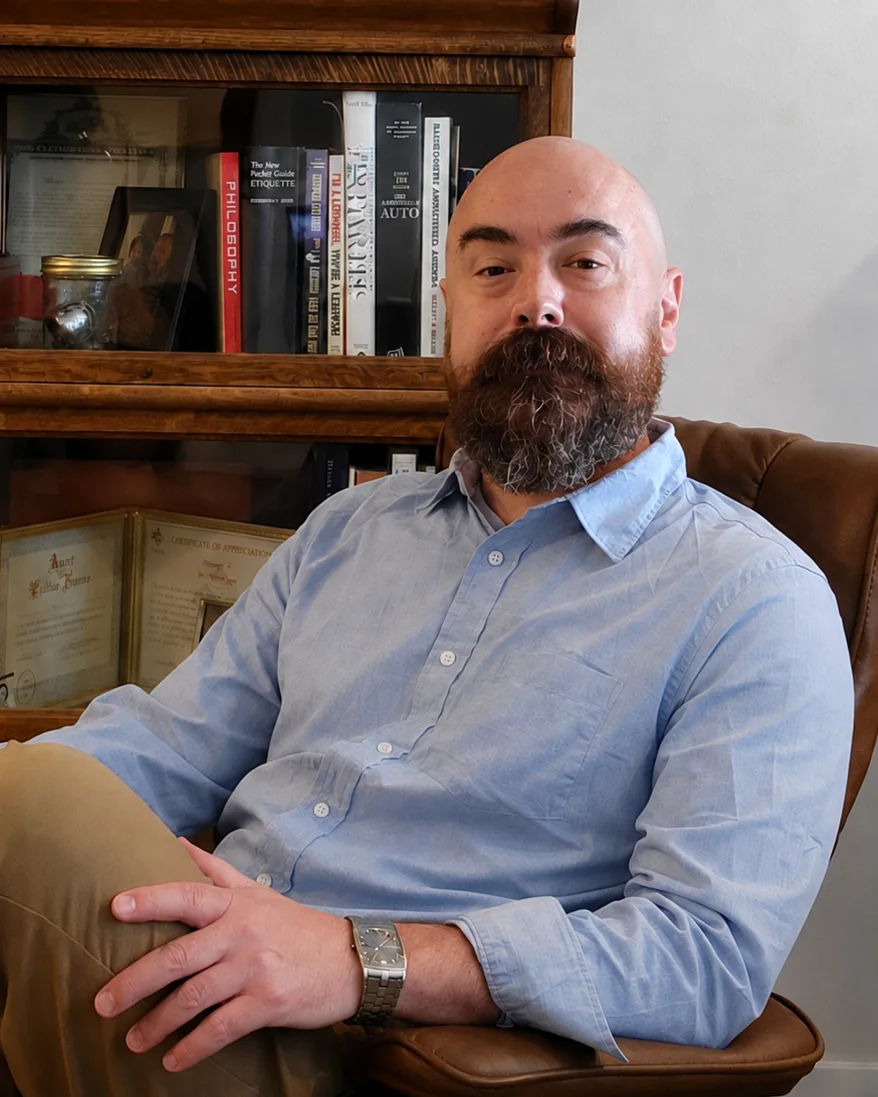
A therapist who will not sugar-coat it
If you are struggling in a relationship, repeating the same painful patterns, or trying to make sense of a breakup, mixed signals, or a partner who shuts down, you do not need a lecture. You need a neutral person who will listen carefully, challenge you when needed, and help you decide what comes next.
That is the job as I see it. I am a Licensed Clinical Social Worker with 17 years in practice, and most of the people who contact me come in for a relationship: dating decisions, difficulty trusting, setting boundaries, or the same fight that keeps coming back. The rest come in for trauma, depression and anxiety, or drinking and drug use that has started costing them. Often it is several of those at once, and they get worked on together.
Before private practice I spent 13 years as a clinician with the Department of the Army and the Department of Veterans Affairs. Those years shaped how I work: practical, judgment-free, and straightforward.
You can expect to be heard without being judged. Sessions are supportive and direct. If something you are doing is working against you, I will say so, and we will figure out what to do instead. The goal is for you to leave therapy with greater clarity, confidence, and direction.
Practical, research-based therapy
Three approaches I use, and what each one is for.
Cognitive Behavioral Therapy (CBT)
CBT looks at the specific thoughts and habits that keep a problem going and works on changing them, one at a time, between sessions as much as during them.
Motivational Interviewing
Motivational Interviewing is a way of talking through mixed feelings about change, so the decision to drink less, stay, leave, or try something different ends up being yours.
Psychodynamic Therapy
Psychodynamic therapy looks at where a pattern came from, usually earlier relationships, so you can stop reacting to the present as if it were the past.
Education & Qualifications
Fully licensed, in three states, with separate credentials for substance use counseling.
Education
Master of Social Work (MSW)
UNLV, 2009
Licensure
Licensed Clinical Social Worker (LCSW)
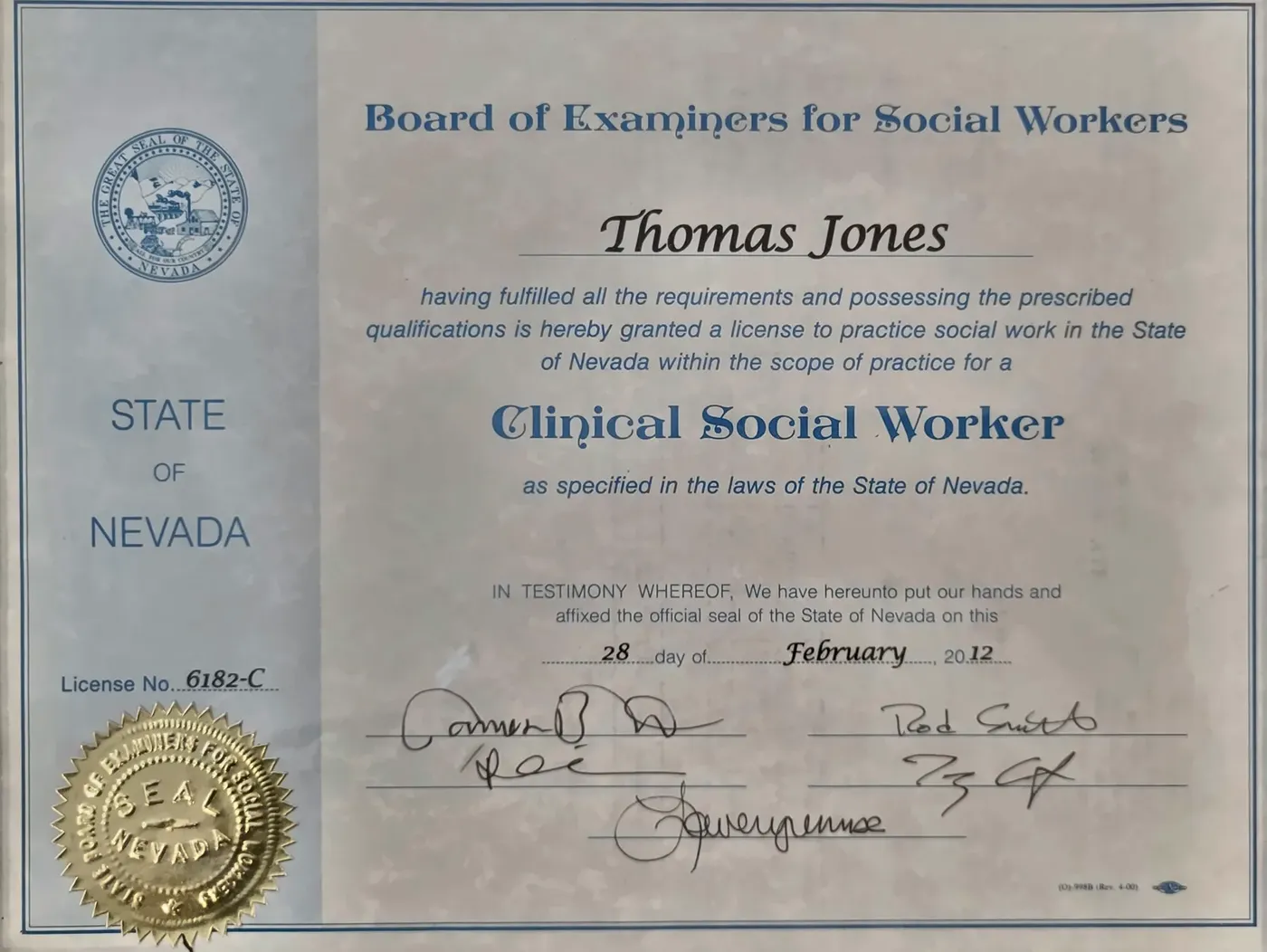
Nevada, license 6182-C, since 2012
Utah, license 14232258-3501
Arizona
Substance Use Counseling
Licensed Clinical Alcohol and Drug Counselor (LCADC)
Nevada, certificate 00409-LC, since 2016
Master Addiction Counselor (MAC), NAADAC, since 2013
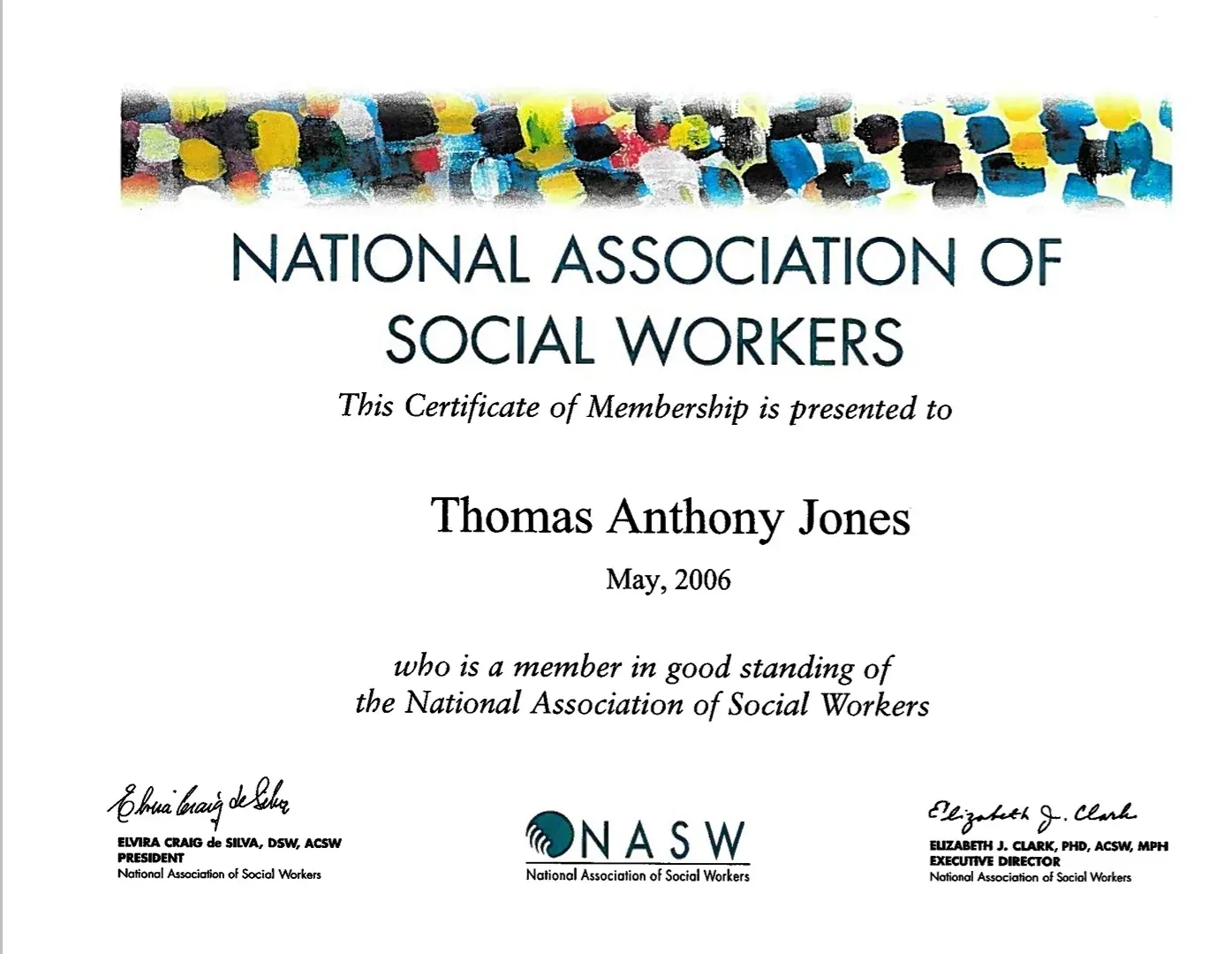
Professional Membership
National Association of Social Workers (NASW)
Member since 2006
NAADAC is the national association for addiction counselors. Its Master Addiction Counselor credential requires a master's degree, a current counselor license, 6,000 supervised hours, 500 hours of education, and a national exam.

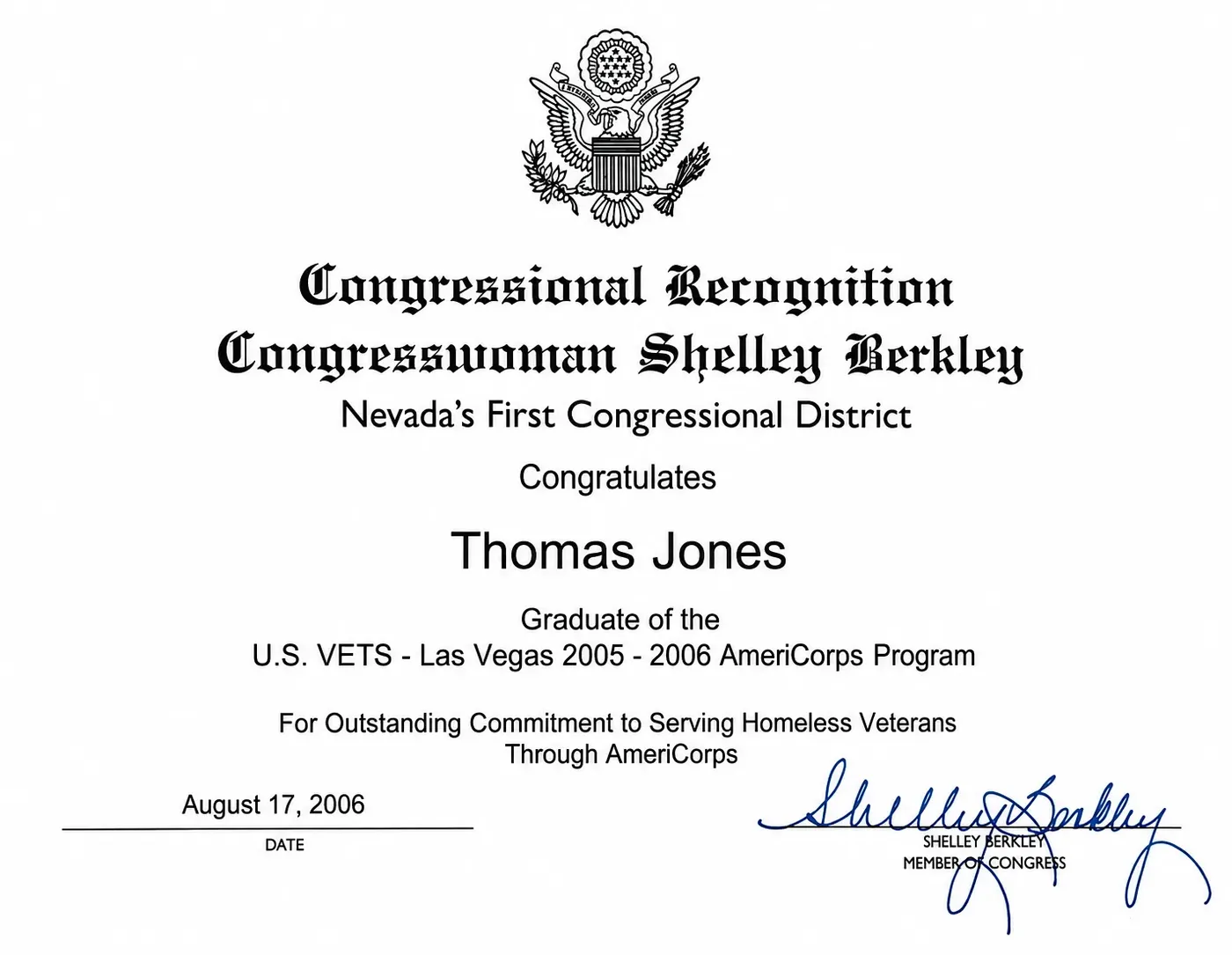
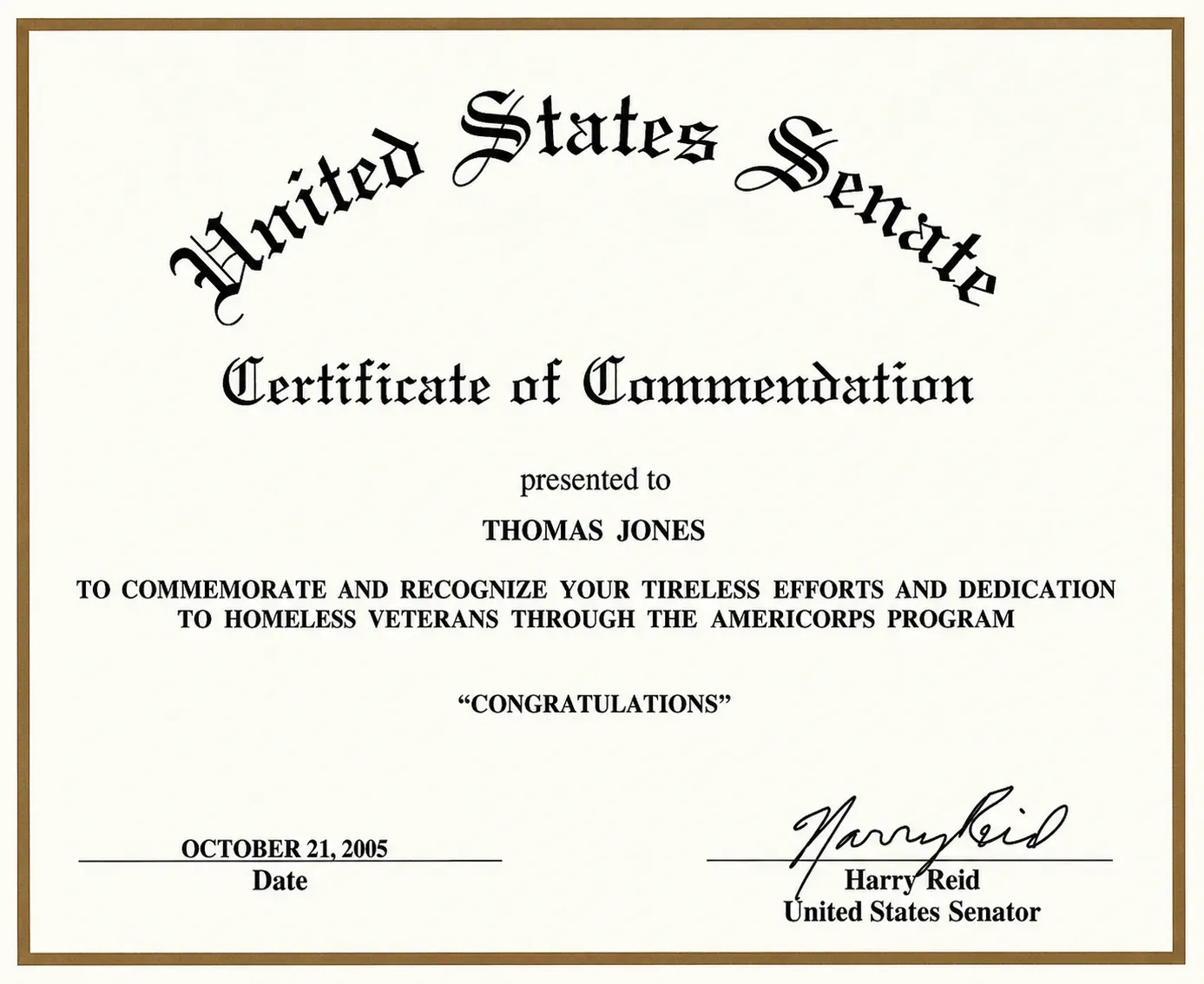
On the record
Four certificates, with dates, from the early years of this work.
What you can expect
Three things you can count on before you book.
The first session
We cover what brought you in, your history in broad strokes, and what you want to be different. I ask more questions in the first session than I will later on.
The pace
Weekly to start is typical. Some people move to every other week once things settle. There is no set number of sessions, and you can stop when you have what you came for.
Honesty
I will not sugar-coat things, and I will not take sides. If something is not working, you will hear it from me plainly, and we will decide together what to try instead.
Ready when you are.
Sessions are booked through Alma. Same colors, same calm, one click.